I design aerospace hardware
and the software behind it.

I'm Steven Kim, starting mechanical and electrical engineering at Dartmouth College (class of 2030). The work below runs from rotating detonation engines to software that generates optimized print-in-place drones. I was recently a hardware engineering intern at Pencil and a computer/electrical contractor at the Portland State Aerospace Society. I've carried out dozens of personal and team projects, but below are some of my most recent & favorite.

ITAR trained · FCC General Class · NAR Level 1 · AMA RC pilot

Selected work

01 — Propulsion research

Rotating Detonation Engine CFD study
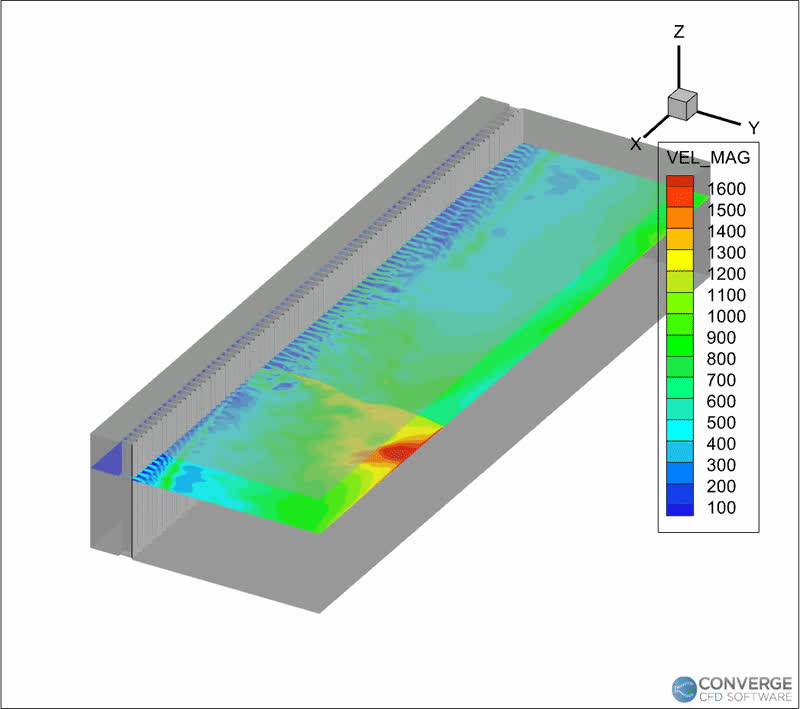
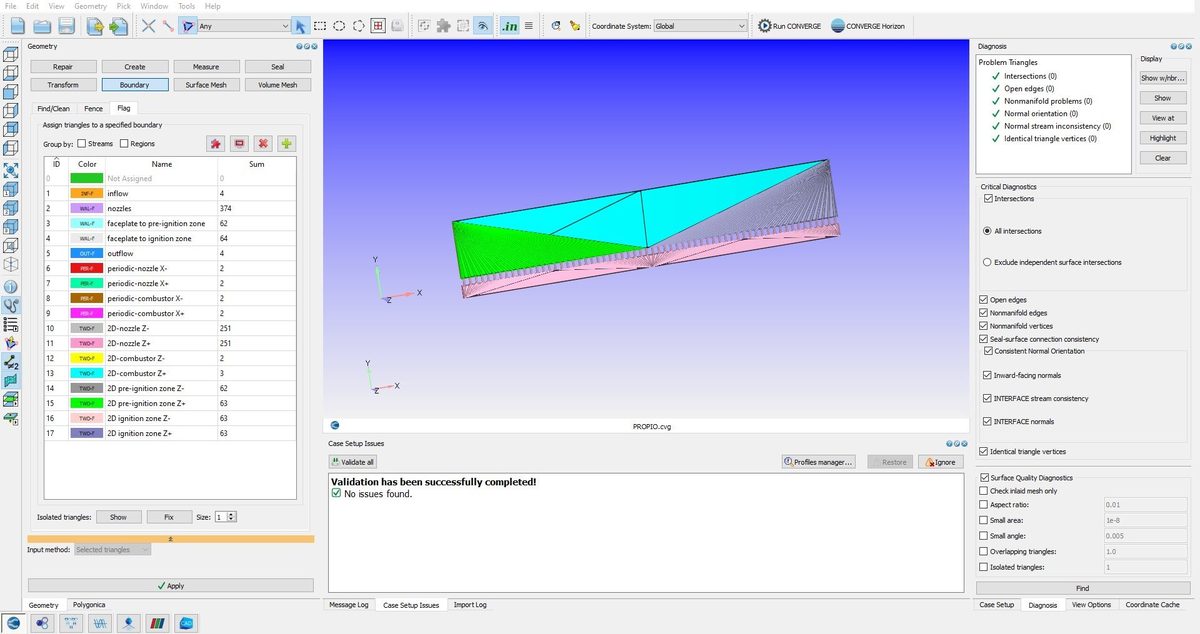
Still of the velocity field in the unwrapped annulus Case setup and boundary flagging in CONVERGE Studio

Senior research project, Oct 2025 to Mar 2026

An end-to-end design study of a small-scale hydrogen rotating detonation engine, carried from literature review to a working reacting-flow simulation. An RDE replaces the subsonic flame of a conventional combustor with a detonation wave travelling continuously around an annular channel.

I sized the combustor against the Bykovskii and Wolanski operability criteria, modelled it in Fusion 360, and built the reacting-flow case in CONVERGE CFD with detailed hydrogen chemistry, adaptive mesh refinement and periodic boundaries on an unwrapped annulus. The reference case reproduced a sustained rotating detonation wave, confirmed by front structure, periodic wrap-around without decay, and monitor-point pressure periodicity.

It is a demonstrated methodology and a qualitatively correct detonation, not a validated engine: wave speed was never compared against Chapman–Jouguet velocity, the cell-count cap ruled out a grid-convergence study, and the figures show that case rather than the custom geometry.

Combustor bore
75 mm
Annulus width
2 mm
Chemistry
SAGE, LLNL H₂
Solve time
~4 days, 4 cores

CONVERGE CFD, Fusion 360, Tecplot, ParaView, Python

View the repository
02 — Design software

AeroForge

The AeroForge design studio: a spec sheet of solved aerodynamic values, a 3D aircraft view with centre-of-gravity and neutral-point overlays, and a gallery of five generated wing variants
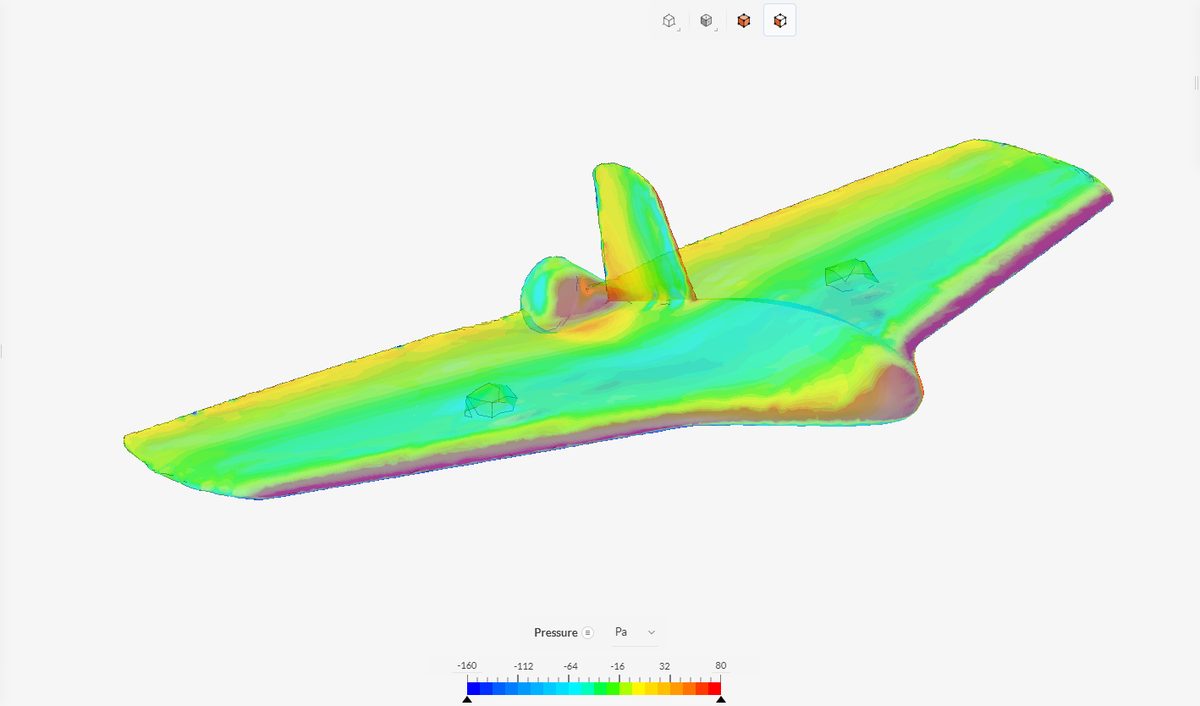
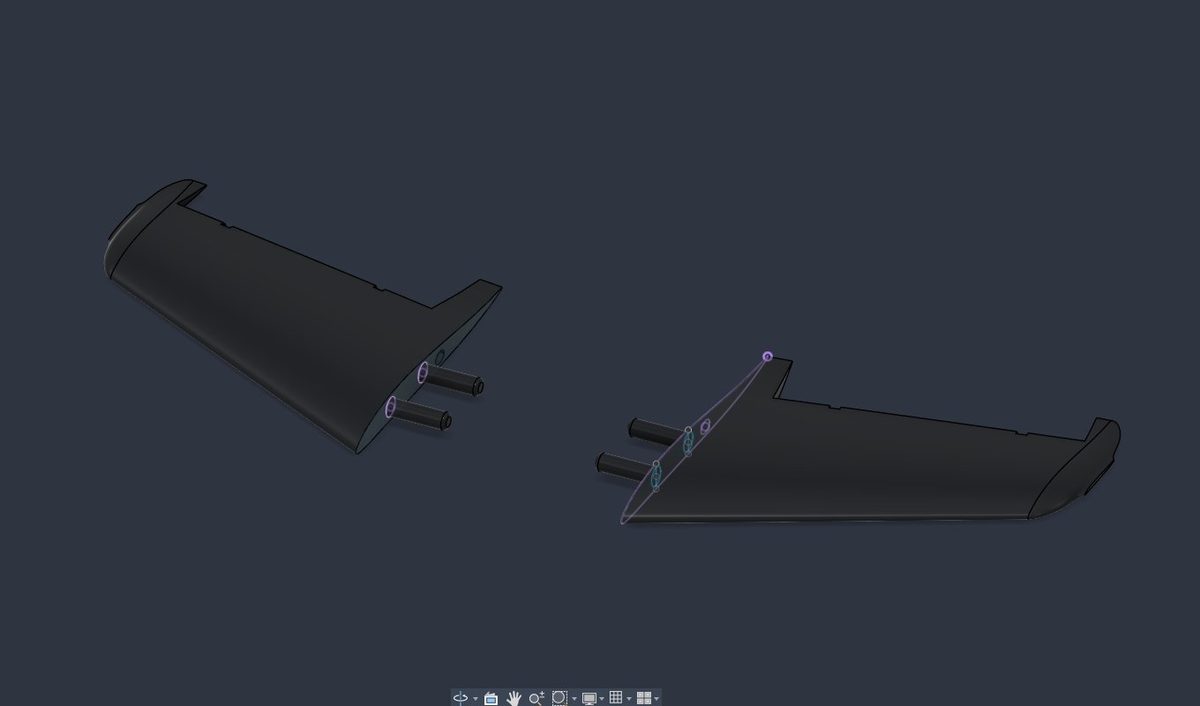
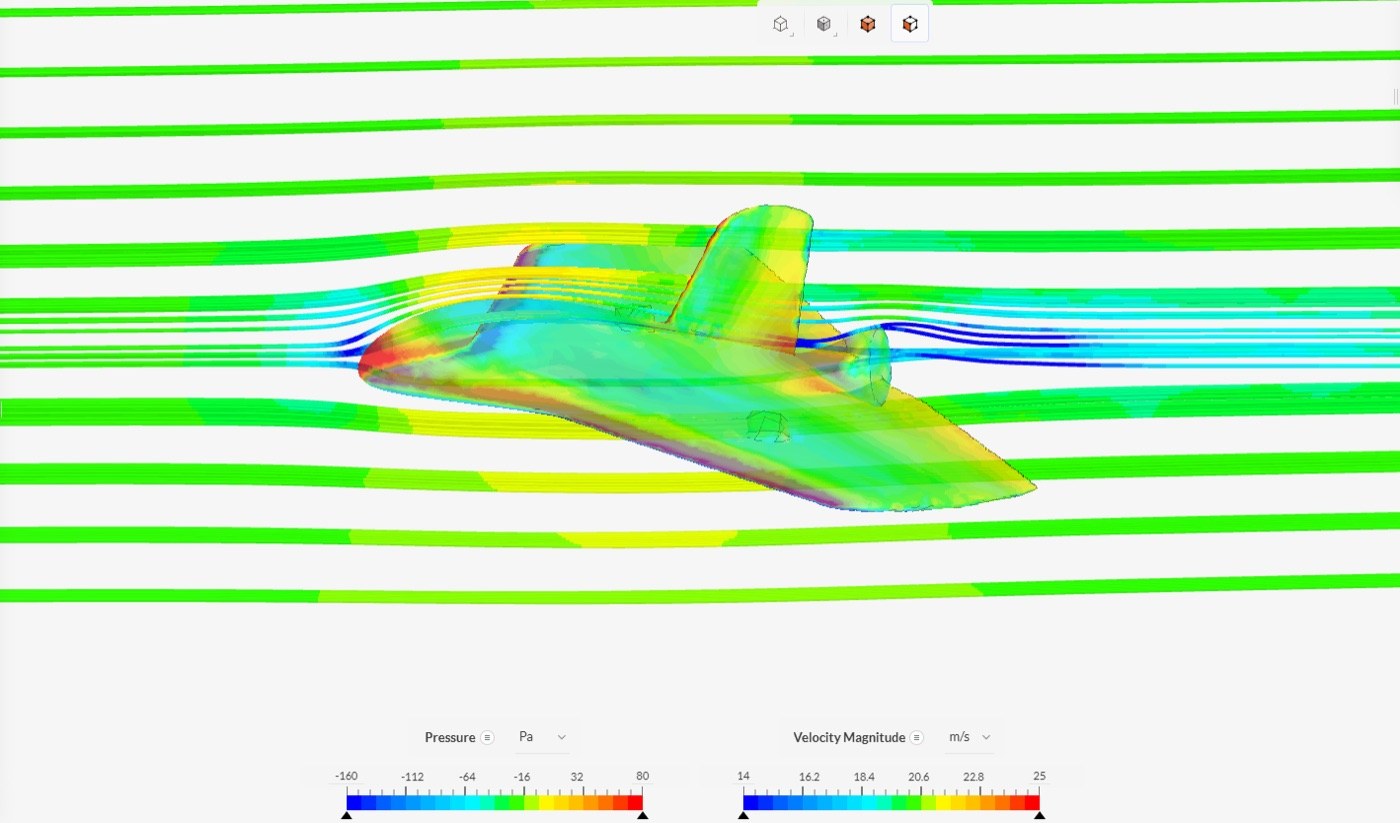
RANS streamlines over the generated flying wing, surface coloured by pressure at 20 m/s Surface pressure on the generated flying wing, planform view, pinned to a -160 to +80 Pa scale The flown wing's panels in Fusion 360 with hand-added joiner pegs

Independent project, Jul 2026 to Aug 2026

A physics-based RC aircraft design studio that outputs print-ready hardware. Give it an aircraft type, a mission, a cruise speed and a size box; it solves the coupled weight–aerodynamics–stability problem, returns five different aircraft, renders them in 3D, and exports CAD with servo pockets, wire runs, hinges, control horns and a magnet hatch already cut into the part.

Every number on screen is a real calculation: ISA atmosphere, NeuralFoil polars at RC Reynolds numbers, a spanwise strip model for the neutral point, tail-volume stability for tailed layouts. The CAD is the hard part: one watertight solid for the STL, a STEP assembly of named bodies, print-in-place captive-pin hinges, and every boolean existence-checked because OpenCASCADE will report success on an operation that did nothing.

Three generated airframes were run as full 3-D RANS cases on SimScale to check the internal physics against a solver that knows nothing about it; the small figures show the flying wing's streamlines and surface pressure at 20 m/s. One generated wing was printed in LW-PLA and test-flown.

Test suite
348 passed (v3.1 gate)
Aircraft families
6
Validation
3D RANS, k-ω SST
Best L/D in CFD
7.27, single AoA

Python 3.12, FastAPI, CadQuery / OpenCASCADE, NeuralFoil, three.js, SimScale

View the repository

03 — Embedded hardware

TC001 Thermal Goggles

Two seconds of the goggles' thermal feed: a person waving at the camera in white-hot rendering
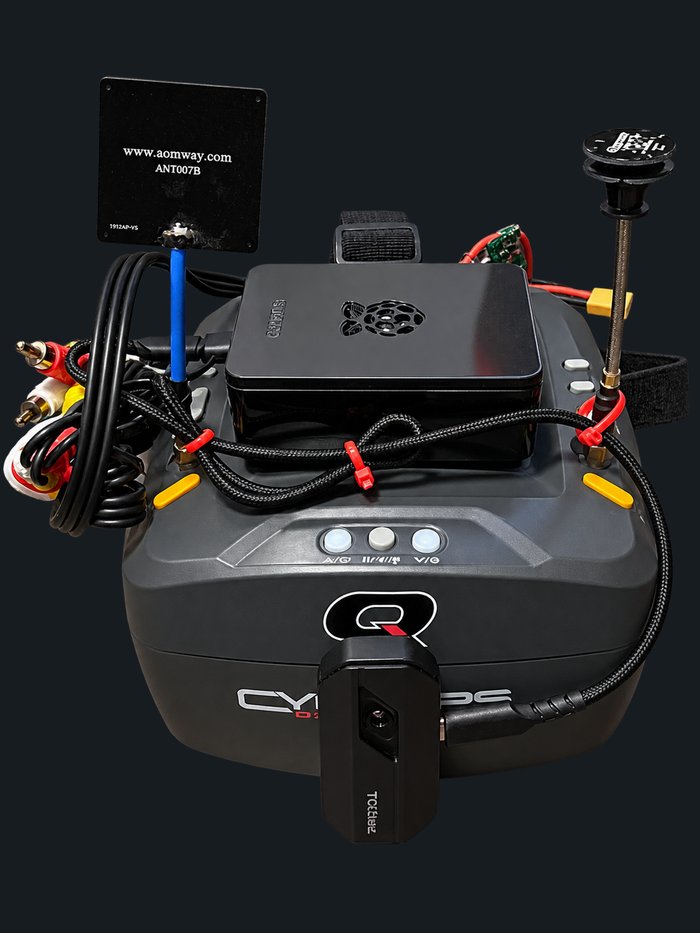
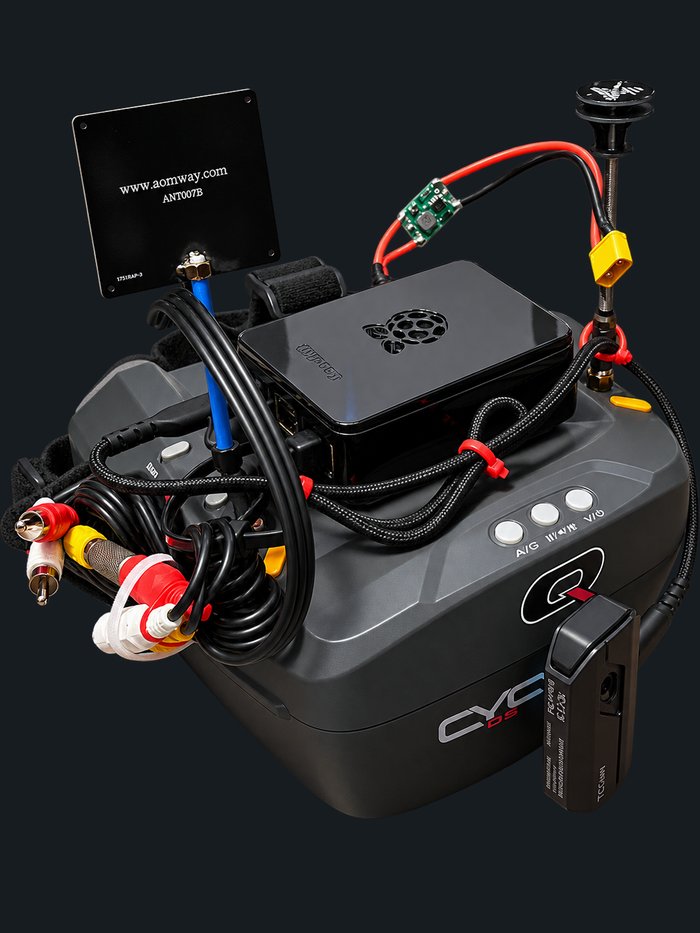
Front view of the finished headset with the Pi and TC001 mounted on the goggles Angled view of the finished headset showing the camera, cabling and antenna

Head-mounted thermal vision from a Raspberry Pi 4, a TOPDON TC001 USB thermal camera, and a pair of analog FPV goggles. The TC001 is built to plug into a phone; I wanted it to drive a headset and behave like an appliance — apply power, put it on, see heat.

The Pi pulls the 256×192 LWIR stream over V4L2 at 25 fps, renders it for seeing rather than measuring with local contrast enhancement and a light unsharp mask, and pushes NTSC composite out of the A/V jack. It boots straight into the viewer with no desktop, and the goggles' own input switch doubles as a mode switch between the drone feed and thermal. The clip is the goggles' own output; the two photos are the finished headset. Latency and battery life have not been measured yet.

Raspberry Pi 4, Python, OpenCV, V4L2, Shell

Repository

04 — Hardware build

Rook 2020 MK2 CoreXY printer

The completed Rook 2020 MK2 CoreXY 3D printer, three-quarter side view with the background removed
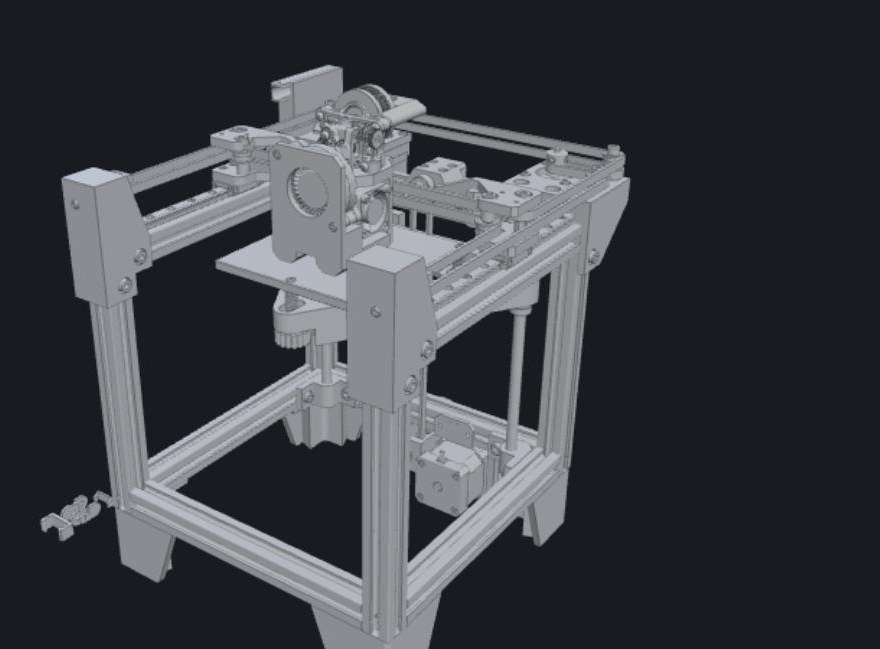
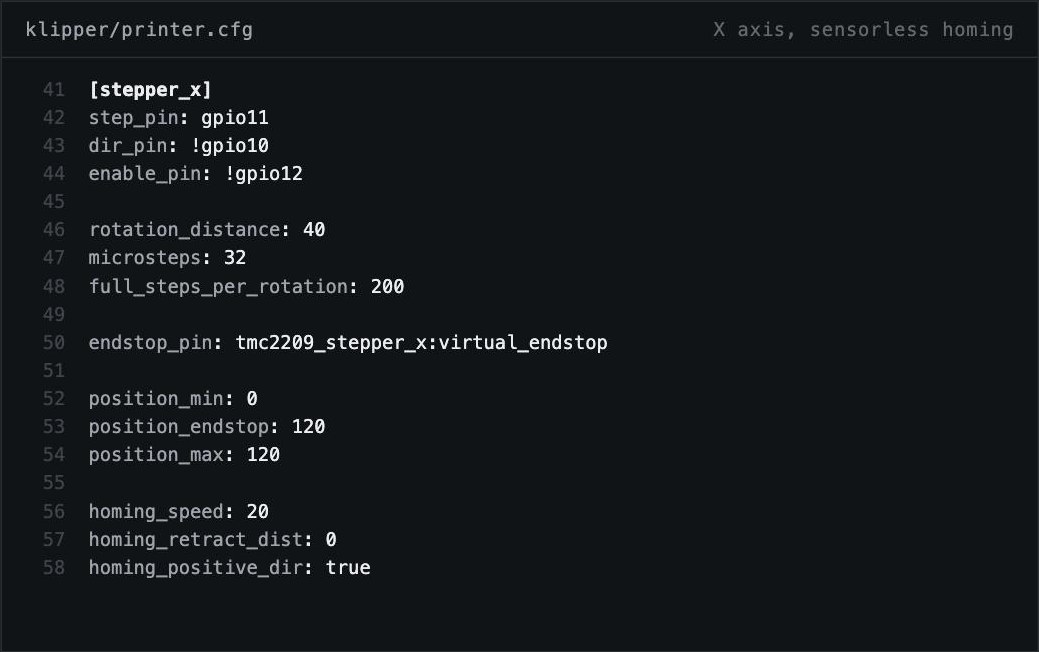
Shaded render of the full printer CAD assembly, exported from the STEP model Excerpt of printer.cfg: the X stepper and its TMC2209 sensorless-homing settings

Independent project, Nov 2024 to May 2025

A CoreXY 3-D printer built from Rolohaun Design's open-source Rook 2020 MK2 and documented so the build can be reproduced or continued from another machine: the Klipper config, the CAD assembly, and an attributed parts list.

120 × 120 × 92 mm on a 2020 extrusion frame, BTT SKR Pico driving four TMC2209s over shared UART, Klipper and Mainsail on a Raspberry Pi, sensorless StallGuard homing on X and Y, and an HDX-Lite direct drive feeding a Bambu X1 hotend. Extruder calibration and resonance tuning are still open, and the repo says so.

Klipper, Raspberry Pi, BTT SKR Pico, Fusion 360

Repository

Experience

Pencil, hardware engineering intern

Y Combinator-backed hardware compliance startup, Seattle, Aug 2026

Test, PCB design and controls. Ran bench testing on RF modules and custom PCBs against the regulatory certification requirements the company's product is built to verify. Took boards from schematic capture through layout and milled prototype PCBs in house, cutting the turnaround between a design change and a board on the bench. Bench-tested motor drive and closed-loop control electronics, recording results and failure modes as test evidence.

Composite launch-vehicle airframes

Portland State Aerospace Society, Jun 2025 to Jan 2026

Student member on structures and avionics. Completed ITAR compliance training and worked on export-controlled hardware in a controlled-access shop alongside university engineers. Designed an isogrid "dragon skin" reinforcement for lightweight composite airframe sections to damp cavity acoustics within the section's mass budget, and laid up and finished sections by hand from drawing through cure, trim and fit check. The people there led to the mentorship behind the RDE project.

Oregon State University, materials science research intern

Corvallis, Jul 2023

Melted and cast a bulk metallic glass sample in a vacuum arc furnace, controlling the cooling rate to keep the alloy amorphous rather than crystalline. Compared microstructure against measured yield strength and hardness, then evaluated what limits the alloy's manufacturability at production scale.

Skills

Simulation and propulsion

  • CONVERGE CFD: case setup, meshing, adaptive refinement, reacting flow
  • Detailed combustion chemistry (SAGE solver, LLNL mechanisms)
  • External aerodynamics: steady RANS, k-ω SST and k-epsilon, SimScale
  • Detonative propulsion: RDE operability and sizing criteria
  • Compressible flow and choked-injector design
  • Tecplot and ParaView post-processing

Software engineering

  • Python 3.12: numerical modelling, constrained optimisation, automation
  • FastAPI services with worker pools and content-addressed caching
  • CAD automation with CadQuery and OpenCASCADE: STEP and STL export, boolean verification
  • Airfoil and stability modelling: NeuralFoil polars, strip theory, tail volume
  • Front-end: TypeScript, Next.js, Tailwind, three.js
  • Test suites that build and check real geometry rather than mocks

Design and fabrication

  • Fusion 360 and Onshape solid and mesh modelling; STEP and STL deliverables
  • Fiberglass hand layup, CNC milling and lathe work
  • Design for FDM: hinges, captive pins, printed-fit clearances, LW-PLA airframes; PrusaSlicer
  • Design for metal SLS; STL preparation and geometry repair
  • 3-D printer building from open designs: CoreXY and Cartesian, TMC2209 drivers, sensorless homing
  • Klipper configuration, tuning and input shaping, Mainsail on Raspberry Pi

Electronics, embedded and test

  • PCB design in Altium Designer, KiCad and EasyEDA, through to in-house milled prototypes
  • STM32 firmware in C/C++; stepper motors, servos, power stages and wiring for small builds
  • Embedded Linux on Raspberry Pi: V4L2 capture, OpenCV, composite video out, auto-booting appliances
  • Bench testing of RF modules, motor drives and closed-loop control electronics against certification requirements
  • Materials testing: vacuum arc melting of bulk metallic glass, compression testing
  • Solid rocket motors, composite airframes and ITAR-controlled shop work